Loading...
Serving Riverhead, NY and surrounding areas. (631) 381-4521
If your floors are cold and your heating bills keep climbing, the crawl space below your home is likely where the heat is going. We stop that at the source.
Crawl space insulation in Riverhead acts as a thermal barrier between the cold ground and your living space. Without it, cold air rises through your floors in winter and damp air infiltrates in summer, forcing your HVAC system to work harder. Most crawl space jobs are completed in a single day.
Many Riverhead homeowners discover the problem after years of accepting cold floors as normal. The crawl space sits below rooms where your family actually lives, which makes it one of the highest-impact areas for comfort and energy use. If you have also noticed a musty smell coming from the lower level of your home, moisture in the crawl space is often the cause - and insulation paired with a proper vapor barrier addresses both problems at once.
For homes that need a more comprehensive solution, crawl space insulation often works best alongside crawl space vapor barrier installation to control the ground moisture that drives so many issues on the East End.
If you walk across your kitchen or living room floor in winter and it feels noticeably cold underfoot even with the thermostat set high, cold air is moving up from an uninsulated crawl space below. This is especially common in Riverhead homes built before the 1990s, where crawl space insulation was minimal or has degraded over time.
A persistent musty or earthy odor - especially in rooms on the ground floor or near the crawl space hatch - often means moisture is building up below. In Riverhead, where the soil releases moisture year-round and bay-area humidity is high in summer, crawl spaces without proper vapor barriers are prone to this. The smell is often an early warning sign of mold growth on the wooden floor joists.
If your energy bills have risen over the past few winters but nothing obvious has changed, the crawl space is worth investigating. Gaps or deteriorated insulation below your floor allow conditioned air to escape and outside air to enter, forcing your heating system to work harder. Riverhead's cold winters make this effect more pronounced than in milder climates.
If you have shone a flashlight into your crawl space and noticed torn or missing plastic on the ground, gaps around pipes or beams, or even daylight coming through the foundation vents, those are visible signs the space is not properly sealed. Old plastic sheeting that is crumpled, torn, or covered in dark spots is no longer doing its job.
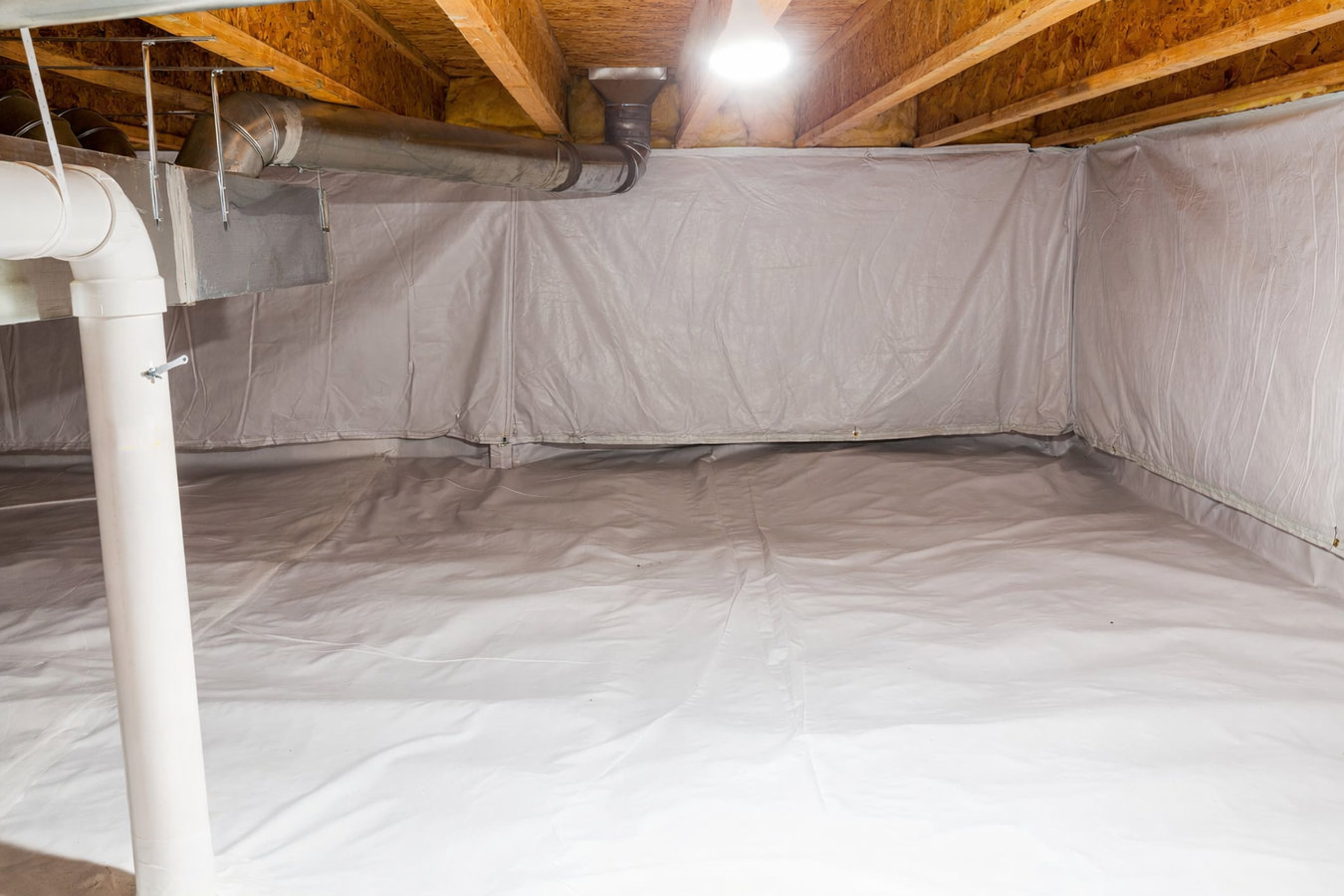
We offer two main approaches to crawl space insulation depending on how your home is built and what the space looks like when we assess it. Traditional floor joist insulation installs material between the wooden beams directly above the crawl space - it is often the right choice for vented crawl spaces with otherwise dry conditions. Crawl space encapsulation seals the entire space with a heavy-duty moisture barrier on the walls and ground, then insulates the walls themselves, which does a stronger job of controlling the moisture that drives so many problems in the Riverhead area.
Every job includes a thorough assessment before we start, so we are not guessing at the right method. If old insulation needs to come out first, we handle that as well. For homes dealing with significant moisture infiltration, we coordinate wall insulation alongside the crawl space work when it makes sense. For more complex whole-home efficiency upgrades, our crawl space work pairs well with crawl space vapor barrier installation.
Best for vented crawl spaces with dry conditions where adding material between the joists above the space is the most practical approach.
Suited to homes where moisture control is the primary concern - seals the walls and floor with a heavy-duty barrier and insulates the perimeter walls.
Paired with any insulation method to stop ground moisture from rising into the space and affecting your floor joists and living area above.
Riverhead sits at the base of the North Fork, where cold winters and sustained moisture from the surrounding bays create conditions that are hard on uninsulated crawl spaces. Much of the area's housing stock was built between the 1940s and 1980s - homes that often have crawl spaces with deteriorated vapor barriers, missing insulation, or venting configurations that no longer reflect current best practices. The sandy glacial soils throughout Riverhead also allow ground moisture to move freely upward into crawl spaces, especially during wet seasons. That combination of cold air above and damp soil below is exactly the environment that degrades floors and drives up heating costs.
We work throughout the Riverhead area, including Eastport and Aquebogue, where the same coastal moisture and older housing stock create nearly identical challenges. New York State has adopted residential energy code requirements that set minimum insulation levels for crawl spaces, and Suffolk County may require permits for certain scopes of work. We handle the permit process so that responsibility does not fall on you.
We ask about the size of your home, whether you have noticed moisture or cold floors, and how you access the crawl space. This helps us come prepared and give you a realistic picture before we even arrive. We respond within 1 business day.
We access the crawl space and spend 20 to 45 minutes evaluating what is there - existing insulation, vapor barrier condition, moisture or mold signs, and how accessible the space is. You do not need to go in yourself; we walk you through our findings in plain language afterward.
You receive a written estimate specifying what work will be done, what materials will be used, and the total cost. If a permit is required under Suffolk County rules, a reputable contractor includes that in the estimate and handles the filing - it does not fall on you.
Most crawl space jobs are completed in a single day. The crew removes old material if needed, installs the vapor barrier, and installs the new insulation. When the work is done, we walk through the results with you - either with photos or at the access point - before we leave.
We respond within 1 business day - no obligation. Someone from our office will call to schedule your free on-site estimate at a time that works for your schedule.
(631) 381-4521We have served Riverhead and the surrounding East End communities since 2017. We understand the older housing stock, the sandy soil conditions, and the coastal moisture that makes crawl spaces here more demanding than in drier inland areas. That local knowledge shapes every assessment we do.
We assess moisture conditions before any new material goes in. Putting new insulation over an existing moisture problem does not fix it - it buries it. Every job includes a vapor barrier recommendation so your crawl space is actually sealed, not just covered.
We are familiar with Suffolk County's permitting requirements and New York State energy code standards for crawl space work. If your project requires a permit, we file it and coordinate the inspection. You do not need to navigate the building department yourself. See NYSERDA for New York State energy programs and requirements.
Our estimates spell out all work, materials, and costs upfront. There are no add-on charges for disposal or vapor barrier work after the fact. What is in the quote is what you pay, and we document each job from assessment to completion so you have a clear record of the work.
Our goal on every crawl space job is simple: leave the space sealed, dry, and documented so you know exactly what was done and why. No guessing, no shortcuts, and no surprises at the end of the job.
Fill gaps in your walls and reduce the drafts and heat loss that crawl space work alone cannot address.
Learn MoreHeavy-duty plastic sheeting installed across the crawl space floor to stop ground moisture from rising into your home.
Learn MoreFall slots fill up fast in Riverhead - get your free on-site estimate now and have the work done before cold weather arrives.