Loading...
Serving Riverhead, NY and surrounding areas. (631) 381-4521
Loose-fill material fills every corner batts can not reach - so your home holds heat better, your heating system works less, and those drafty rooms finally feel comfortable.
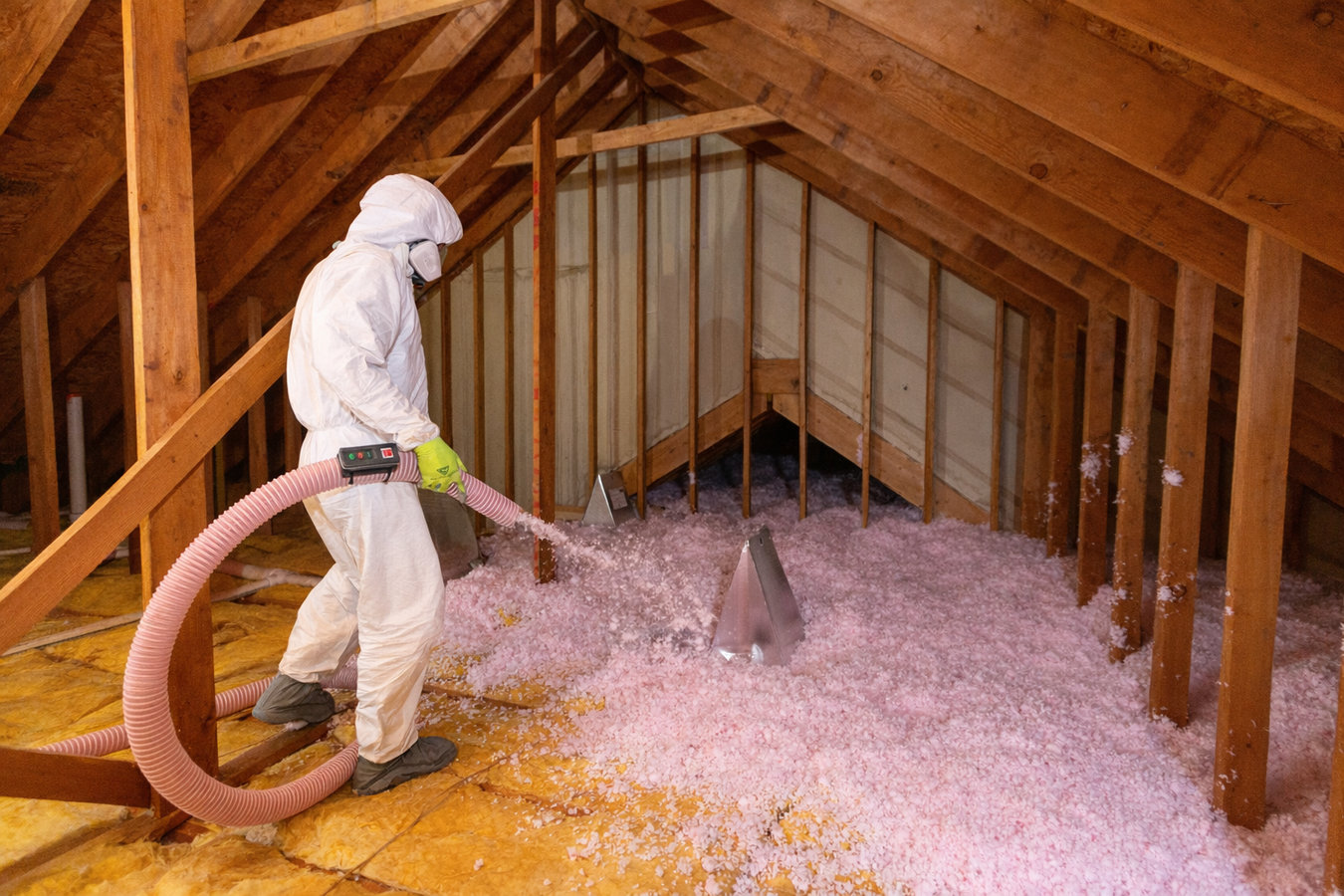
Blown-in insulation in Riverhead uses loose fiberglass or cellulose insulation - pumped in by hose - to fill attics, walls, and crawl spaces evenly, and most standard attic jobs are completed in a single day. Unlike pre-cut batts, the loose fill flows around framing, pipes, and odd-shaped cavities that rigid material simply can not reach. The result is a more complete thermal barrier with fewer cold spots.
Many Riverhead homes built before the 1980s have little or no effective insulation left - years of settling, pest activity, and moisture have reduced what was there to a fraction of what it should be. Blown-in work is one of the fastest ways to address that gap. If your attic also has air leaks around fixtures and framing, we recommend pairing this service with air sealing services first - sealing the gaps before adding insulation on top of them makes a significant difference.
For homes with walls that have never been insulated, wall insulation can be done alongside attic work in many cases, tackling the full thermal envelope at once.
If your energy costs jump sharply from October through March, heat is almost certainly escaping through your attic or walls. Riverhead winters are cold enough that even a modest insulation gap translates into real money lost every month. This is the most common sign homeowners notice first.
Walk through your home on a cold January morning and notice which rooms feel drafty or hard to heat. In Riverhead's older homes, uneven temperatures almost always point to inconsistent or missing insulation in the attic above those spaces. That is not a heating system problem - it is an insulation problem.
Take a flashlight up to your attic and look at what is there. If you can see the tops of the floor joists, your insulation is too thin to do its job. Insulation that has been compressed, disturbed by pests, or damaged by a past roof leak will also look matted and uneven.
Ridges of ice building up along your roof edge during cold snaps are a classic sign of heat escaping through an under-insulated attic. The escaping heat melts snow on the upper roof, which refreezes at the cold eaves. Riverhead gets enough freeze-thaw cycles each winter to make ice dams a real and recurring problem.
We install blown-in insulation in attics, walls, and crawl spaces using both fiberglass and cellulose materials, matched to the specific area and conditions of your home. Before any material goes in, we check for moisture issues and seal air leaks around fixtures, pipes, and framing - because skipping that step is the most common reason a new insulation job underperforms. Every job includes a depth check to confirm the finished result meets the recommended levels for Riverhead's climate.
For homes doing a full upgrade, we frequently pair blown-in attic work with home insulation assessments that cover every area of the house, or with wall insulation for older homes where the walls were never properly insulated. We also handle insulation removal when existing material has been damaged by moisture or pests and needs to come out before new material goes in.
Best for homes with inadequate attic insulation - addresses the single highest-impact area for heat loss and ice dam prevention.
Ideal for older homes with uninsulated wall cavities - material is blown in through small holes drilled in the exterior or interior wall.
Suited to homes with crawl space floors above unconditioned space - reduces cold floors and moisture-related heat loss.
Riverhead sits in a genuine four-season climate - January lows regularly dip into the teens, and summer humidity can make a poorly insulated attic feel like an oven. The temperature swing between the coldest and hottest days of the year can exceed 80 degrees, which means your insulation has to perform in both directions. Riverhead's older housing stock - much of it built before 1980 - was constructed when insulation standards were far less demanding, and many of these homes have never had a meaningful upgrade.
The coastal location adds another layer of complexity. Salt-laden, humid air from the Long Island Sound and Peconic Bay is a real factor for attics and crawl spaces that are not well-sealed. We check for existing moisture damage before installing anything new, because adding insulation on top of a moisture issue just hides it. Homeowners in Southold, NY and Aquebogue, NY face the same coastal humidity challenges - we serve both communities and know what to look for. For more on federally available tax credits, see the IRS Energy Efficient Home Improvement Credit.
We ask a few short questions about your home's age and what is prompting the call - no homework required on your end. We respond within 1 business day and can schedule a free in-home estimate within a few days.
We go up into your attic, check for moisture or pest damage, and measure what is already there. You receive a written quote that breaks down what is included - air-sealing is listed separately so you can see exactly what you are paying for.
The blowing machine sits outside, connected by a hose run through the attic hatch. We air-seal gaps first, then blow in material to the correct depth - typically two to four hours for a standard attic. Your living spaces stay undisturbed.
We confirm depth is consistent across the attic, clean up around the access point, and show you photos before we leave. If you qualify for NYSERDA rebates or a federal tax credit, we provide the documentation you need.
We respond within 1 business day - no obligation, no pressure. After you submit, someone from our office will call to schedule a free on-site estimate at a time that works for you.
(631) 381-4521Many contractors skip air-sealing and just blow in the material - the job looks done but underperforms. We seal gaps around fixtures, pipes, and framing before any insulation goes in, because that step is what makes the difference between a job that works and one that does not.
Coastal Riverhead homes face real humidity risks. We inspect the attic for moisture damage before touching a single bag of material - so you are not trapping a problem inside your home. If we find something that needs addressing first, we tell you.
New York State offers real money back for insulation upgrades - up to 30% federally and additional state rebates through NYSERDA. We handle the documentation and walk you through eligibility before the job starts, so you are not leaving money on the table.
We have been working in Riverhead and surrounding Suffolk County communities since 2017 and know the housing stock, the local permit requirements, and the climate conditions that affect how this work gets done. Local knowledge matters on every job.
Every blown-in job we do in Riverhead starts with an honest assessment and ends with a walkthrough so you can see the finished result yourself. We do not rush through the air-sealing step, and we do not disappear after the truck leaves.
A full-home insulation assessment and upgrade covering attic, walls, and crawl space in one coordinated project.
Learn MoreBlown-in insulation for older wall cavities that were never insulated - done through small holes with minimal disruption to finished surfaces.
Learn MoreRiverhead winters do not wait - schedule your free on-site assessment now and start the heating season with an attic that actually holds heat.